
The Instrument That Does the Work of Seventeen
April 29, 2026
Test and measurement is one of the foundations of modern science and engineering.The industry took shape in the 1950s, when companies began mass-producing dedicated hardware instruments that filled laboratory benches around the world.Each device did one thing. An oscilloscope measured voltage. A spectrum analyser read frequency. A waveform generator produced signals. That model served researchers and engineers well for decades, but over time, as software transformed nearly every other industry, the test bench remained largely unchanged.
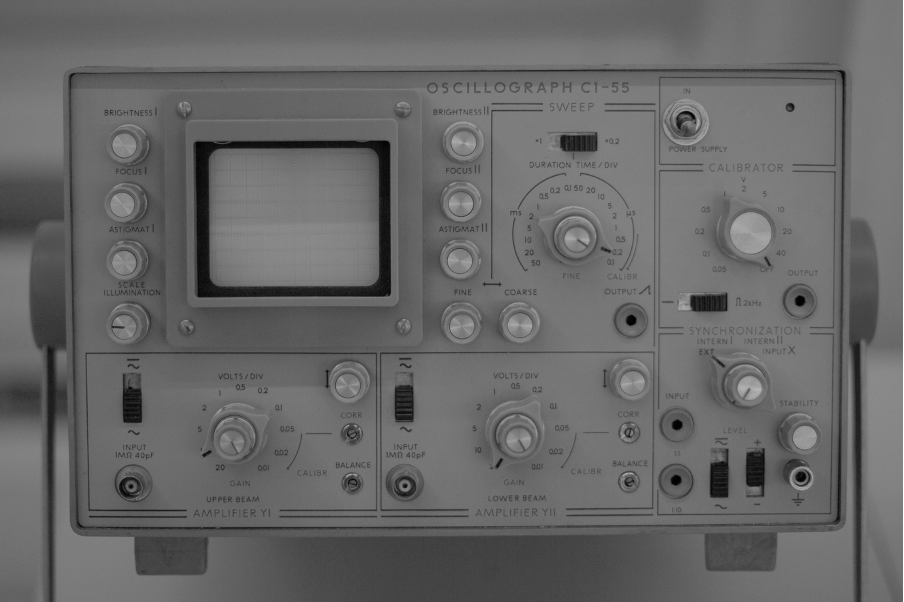
Daniel Shaddock decided there had to be a better way.
A physicist and the youngest professor ever appointed at the Australian NationalUniversity, Daniel's work took him to NASA's Jet Propulsion Laboratory inCalifornia, where he contributed to the detection of gravitational waves, the discovery that earned a Nobel Prize. Joined by Liquid Instruments COO, Dr.Danielle Wuchenich, together they built instrumentation for environments that push the limits of what physics allows, from deep space to the furthest reaches of human ambition. Then they came back to Earth. Literally and figuratively.
Back in Canberra, looking at the cluttered bench in front of them, the question became impossible to ignore. Software had transformed almost every other industry, but the test bench had been left behind. Why?
That answer became Liquid Instruments.
"For decades, engineers have had to adapt to their tools. We’re flipping that model, so the tools adapt to the engineer.”
Daniel Shaddock, CEO, Liquid Instruments
Dedicated hardware instruments have been defining the test bench for decades. Each device did its job well, but the model meant that a fully equipped lab required dozens of separate boxes. Liquid Instruments saw a different path. A single reconfigurable platform, software-defined from the ground up, that could run any instrument, be upgraded continuously, customised to any application, and made increasingly intelligent over time. One device doing the work of seventeen, with software as the engine. In the same way a smartphone consolidated the camera, the music player, and the GPS into a single device, Moku brought that convergence to the test bench.
It was at this early stage that Michele Troni, Chief Investment Officer at Significant Ventures, first sat in a room with Daniel. The company was nothing more than an idea and a founding team. What there was, was a compelling vision:that software-defined instrumentation would eventually replace the hardware box model.

Michele believed the idea and the team. And so did we.
What we saw was a vision for something the world of science and engineering had needed for a long time. Instrumentation underpins how semiconductors are validated, how defence systems are tested, how quantum technologies are controlled. And yet the tools doing all that work were, by the standards of every other industry, cumbersome and costly. We backed that vision at pre-seed alongside the Australian National University, and our involvement has never been passive. We helped set the company up from the ground up, actively supported the team through multiple fundraising rounds and through the challenging journey of turning a Canberra startup into a successful global deep tech business.
Liquid Instruments was founded by Daniel Shaddock, Danielle Wuchenich, and a team of scientists and engineers. The early years were not without difficulty –building something genuinely new in deep tech rarely goes cleanly – but the team drove the business forward with focus and discipline.
The early customers were university research labs, where scientists quickly recognised that Moku was something categorically different. From there, the platform expanded into the most demanding fields in modern engineering:semiconductor development, defence and aerospace, and the frontier of quantum computing.
The company has since moved its headquarters to San Diego, California, grown to nearly 100 employees across Australia and US, and significantly expanded its manufacturing operations in Australia shipping to hundreds of organisations across more than 60 countries.
The latest generation, Moku:Delta, is the fourth iteration of the platform and the most powerful hardware the company has ever shipped. Because the platform is software-defined, it is reconfigurable, AI-centric, customisable, and upgradable in ways that no traditional hardware box could ever be. It delivers 6 GHz frequency coverage, more than an order of magnitude greater than earlier generations, with eight analogue channels and noise levels three times lower than its predecessor. Manufactured in Australia and shipped globally since September 2025, Moku:Delta has already broken the company's previous quarterly sales records and is what the team describes as their crossing-the-chasm product.
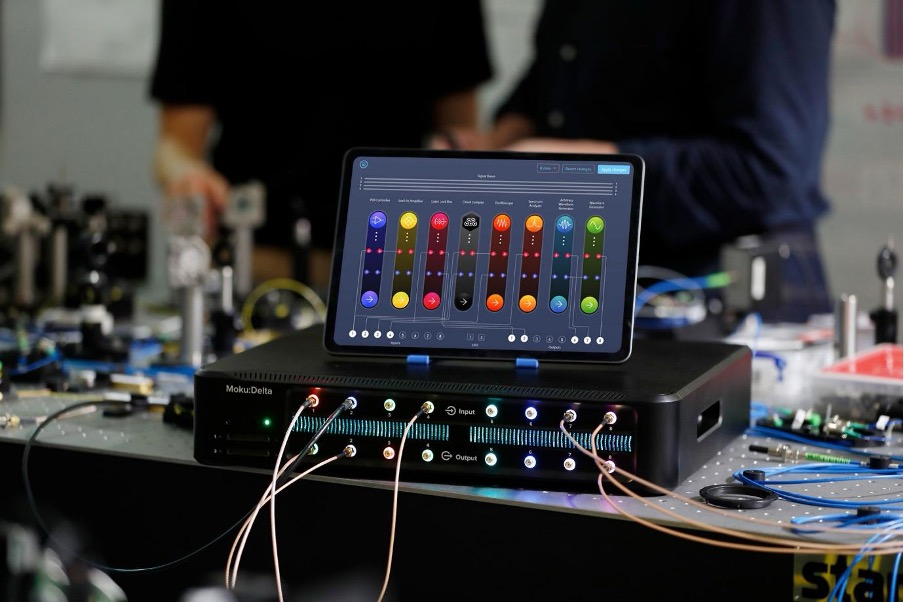
In 2026, Liquid Instruments will take the next step: Generative Instrumentation, an agentic AI capability that allows engineers to create completely new instruments through a natural language prompt. Describe what you need. Moku handles the rest.
To support this phase, the company has closed a USD 50 million Series C co-led by the National Reconstruction Fund Corporation and Keysight Technologies. Keysight’s participation as co-lead is a meaningful signal: the company whose heritage stretches back to the very origins of the test and measurement industry sees software-defined instrumentation as a defining part of the future of test.Significant Ventures participated in the round alongside the other existing investors.
At Significant Ventures, we back innovation in critical technologies that have the power to redefine industries – and we do it early, when the idea is still just a vision and the risk is highest. Ten years ago, we committed to Liquid Instruments before there was a product, a customer, or a revenue line. Today, the company is a global operation with institutional backing, record-breaking sales and technology that is actively reshaping its industry. We are proud to have been part of building that, from the very first day.
If you are interested in partnering with or investing in companies pioneering critical technologies like Liquid Instruments, please get in touch.

© 2026 Significant Ventures | All Rights Reserved | Legal